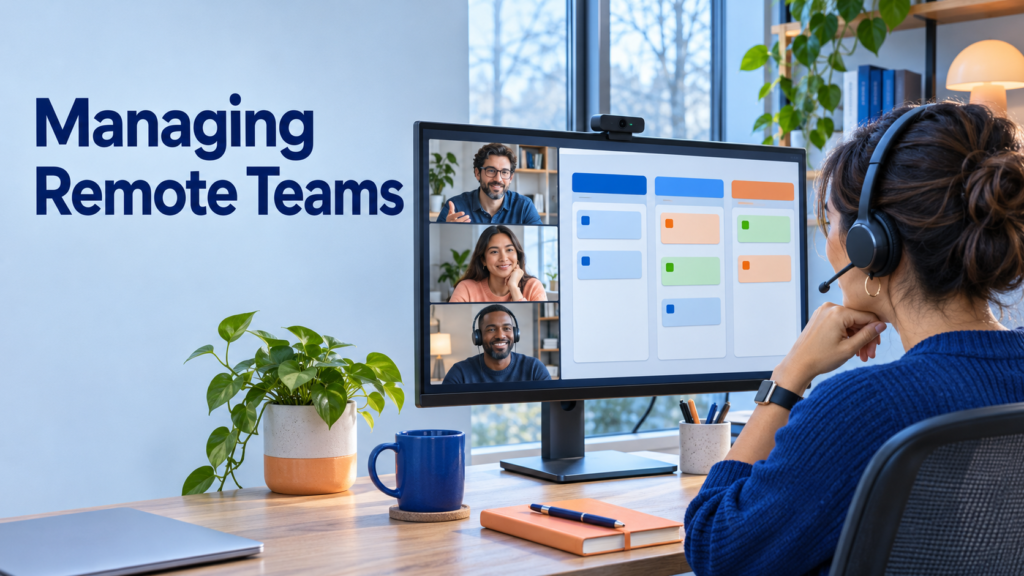
Leading a team you rarely or never see in person changes almost everything about management. The casual corridor conversations, the quick glance to see whether someone looks overwhelmed and the spontaneous problem-solving at a shared desk all disappear. In their place come calendars full of video calls, chat channels that never sleep and the constant challenge of knowing whether work is on track without hovering. Many managers were pushed into remote leadership suddenly and have been improvising ever since. The good news is that remote teams can be just as productive, connected and innovative as office teams when they are managed deliberately.
This guide covers the practical foundations of managing remote teams: setting clear expectations, choosing communication rhythms, measuring results, building trust and connection, supporting wellbeing, handling performance issues and managing the legal, tax, insurance and security considerations that come with people working from home or from other locations.
Table of Contents
Shifting From Presence to Outcomes
The biggest mindset change for remote managers is moving from watching activity to measuring results. In an office, it is easy to equate visible busyness with productivity. Remotely, that shortcut disappears, and managers who try to recreate it through constant check-ins or monitoring software often damage trust. Instead, define what good outcomes look like for each role, agree on deadlines and quality standards and judge performance by what is delivered.
This does not mean ignoring how work gets done. Collaboration, responsiveness and communication still matter. But they should be described as clear expectations rather than inferred from whether someone’s status light is green.
Setting Clear Expectations
Ambiguity is the enemy of remote work. Without the cues of a shared office, people fill gaps with assumptions, and different assumptions lead to frustration. Write down the essentials and revisit them regularly.
- Core hours, if any, when everyone should be reachable
- Expected response times for chat, email and urgent requests
- Which tools to use for which type of communication
- How and when to share progress updates
- How decisions are made and recorded
- What to do if someone is unwell or needs time off unexpectedly
Creating a Team Working Agreement
A team working agreement is a short document created together by the team that sets out how members will collaborate. Involving everyone builds ownership and surfaces differences in preferences early. Review it every few months, especially when new people join or the team’s work changes.
Designing a Communication Rhythm
Remote teams need a predictable rhythm so that people know when information will arrive and when they can focus without interruption. Too many meetings exhaust people, while too few leave them isolated and uninformed.
| Touchpoint | Frequency | Purpose | Format Tip |
|---|---|---|---|
| Team check-in | Daily or a few times a week | Share priorities and blockers | Keep to 15 minutes, or run it asynchronously in a shared thread |
| One-to-one | Weekly or fortnightly | Coaching, wellbeing, feedback | Video on, employee sets part of the agenda |
| Team meeting | Weekly | Updates, decisions, discussion | Share agenda in advance and record decisions |
| Retrospective | Monthly or after projects | Improve how the team works | Use a shared board for anonymous input |
| Social time | Weekly or fortnightly | Build relationships | Optional, varied formats, during work hours |
| In-person gathering | Quarterly to annually if budget allows | Deep connection, planning | Focus on collaboration rather than presentations |
Synchronous Versus Asynchronous Work
Synchronous communication happens in real time, such as video calls. Asynchronous communication happens on each person’s schedule, such as shared documents, recorded updates or message threads. Remote teams work best when they default to asynchronous methods for updates and routine questions, saving live meetings for discussion, relationship building and complex problem-solving. This is especially important for teams spread across time zones.
Building Trust at a Distance
Trust grows from reliability and openness. Managers build it by doing what they say they will do, sharing information transparently, admitting mistakes and giving people autonomy over how they complete their work. Team members build it by delivering consistently and communicating early when problems arise.
Be cautious with employee monitoring tools such as keystroke tracking or screenshot capture. Beyond the damage to trust, they may raise privacy and data protection concerns depending on where employees are located. If monitoring is necessary for security or compliance, be transparent about what is collected and why, and seek legal advice on local rules.
Keeping People Connected
Isolation is one of the most commonly reported challenges of remote work. People miss informal chat, learning by overhearing colleagues and the sense of belonging that comes from shared space. Managers can help by creating deliberate opportunities for connection.
- Start meetings with a brief personal check-in question
- Create optional interest-based chat channels for hobbies, pets or books
- Pair new joiners with a buddy for their first months
- Recognise achievements publicly in team channels
- Hold virtual coffee chats that randomly pair colleagues
- Budget for periodic in-person meetups where practical
Supporting Wellbeing and Boundaries
Remote work can blur the line between work and home. Some people find themselves working longer hours, checking messages late at night and struggling to switch off. Managers should model healthy boundaries by not sending messages at odd hours, or by using scheduled sending so they arrive during working time. Encourage people to take breaks, use their leave and block focus time in calendars.
Watch for signs of burnout, such as declining quality, slower responses, withdrawal from team interactions or a change in tone. Raise concerns gently in one-to-ones and point people toward any support the organisation offers, such as an employee assistance programme or flexible scheduling.
Managing Performance Remotely
Performance management works the same way remotely as in an office, but it requires more intentional communication. Set clear goals, give regular feedback and document significant conversations. When performance issues arise, address them promptly over video rather than chat. Ask about obstacles; remote employees may be struggling with poor internet, an unsuitable workspace, caring responsibilities or unclear instructions.
Guard against proximity bias in hybrid setups, where people who are physically closer to managers receive more attention, opportunities and favourable reviews. Track who is assigned high-profile projects and who is promoted, and check for patterns that disadvantage remote staff.
Legal, Tax and Insurance Considerations
Remote work raises practical compliance questions that many employers overlook. Employees working from another state, province or country may trigger different employment laws, payroll tax obligations and in some cases corporate tax presence for the employer. Rules on overtime, working time, holidays and termination can differ significantly between locations, so check before agreeing to a relocation.
Health and safety duties often extend to home workspaces, at least in terms of providing guidance, equipment assessments and reasonable support. Injuries that occur while working from home may in some circumstances fall under workers’ compensation arrangements, and the rules on what counts as a work-related injury vary. Employers should also review whether their business insurance covers company equipment used at employees’ homes and whether cyber insurance policies require particular security measures. Some jurisdictions require or allow reimbursement of home office expenses, and the tax treatment of allowances differs by country. Professional advice is worth the cost here.
Security for Distributed Teams
Remote work expands the number of places where company data lives. Basic protections include multi-factor authentication, company-managed devices or clear rules for personal devices, encrypted connections, regular software updates and training on phishing scams. Make it easy for people to report suspicious messages or lost devices quickly. A data breach can lead to regulatory penalties, customer notification costs and reputational harm, so prevention is far cheaper than recovery.
Remote Leadership in Small Businesses
Small businesses often move to remote work to cut office costs or hire talent from a wider area. They can be agile and personal, but they may lack formal HR systems. Start with a simple remote work policy, a shared calendar of team rhythms, a reliable set of collaboration tools and clear rules on equipment and expenses. Owners should be especially careful about hiring in other jurisdictions without understanding the obligations, and may consider employer-of-record services or contractor arrangements only after checking that worker classification rules are met.
A Fictional Example
Fernhill Digital, a fictional marketing agency with 25 staff, went fully remote after its office lease ended. Early months were chaotic, with constant pings, long video calls and confusion over who owned which tasks. The managing director introduced a team working agreement, replaced the daily video call with a written morning thread and reserved Tuesday and Thursday afternoons as meeting-free focus time. Each manager held weekly one-to-ones, and the agency met in person twice a year. Client satisfaction stayed strong, and staff turnover dropped compared with the previous office-based year.
Tips for Remote Managers
- Over-communicate context, especially the reasons behind decisions
- Write things down and keep information in shared, searchable places
- Hold regular one-to-ones and protect them from cancellation
- Measure outcomes rather than hours online
- Rotate meeting times fairly across time zones
- Give people autonomy over how and when they work where possible
- Check equipment and workspace needs during onboarding and annually
Common Mistakes in Managing Remote Teams
- Recreating the office schedule with back-to-back video meetings
- Relying on surveillance tools instead of clear goals
- Assuming silence means everything is fine
- Neglecting onboarding and leaving new hires to figure things out
- Ignoring legal and tax obligations for employees in other locations
- Favouring people who are online most or who live near the manager
- Forgetting to celebrate wins and build social connection
Hiring for Remote Roles
Not every strong office employee thrives remotely. When hiring for distributed teams, look for evidence of self-direction, clear written communication and comfort asking for help without being prompted. Practical exercises, such as a short written brief or an asynchronous task, can reveal these qualities better than interviews alone.
Final Thoughts
Managing remote teams successfully is less about technology and more about intentional leadership. Clear expectations replace the informal cues of an office. A steady rhythm of asynchronous updates, focused meetings and regular one-to-ones keeps work moving without exhausting people. Trust grows when managers judge outcomes rather than activity, share information openly and give people autonomy. Deliberate efforts to build connection counter isolation, and attention to wellbeing protects against burnout. Behind the scenes, sound policies on equipment, security, tax, insurance and employment law reduce risks that can otherwise surprise a growing business. Remote leadership is a skill that improves with reflection, so ask your team regularly what is working and what needs to change.
Frequently Asked Questions
1. How often should remote managers meet with team members individually?
Weekly or fortnightly one-to-ones are common. They give space for coaching, feedback and wellbeing conversations that rarely happen naturally when people work apart.
2. Do employers have to pay for home office equipment?
It depends on the jurisdiction and the employment contract. Some places require reimbursement of necessary work expenses, while others leave it to company policy. Many employers provide core equipment such as laptops regardless, for both productivity and security reasons.
3. Can remote teams build a strong culture?
Yes. Culture comes from shared values, behaviours and rituals rather than a building. Remote teams build culture through consistent communication, recognition, fair processes, inclusive meetings and occasional in-person time where possible.