No business operates in a vacuum. Interest rate changes affect borrowing costs, new laws reshape industries, social trends shift customer preferences, technologies disrupt business models and environmental pressures change how products are made and sold. Organizations that spot these forces early can adapt and even benefit. Those that ignore them can be caught off guard. PESTLE analysis is a structured way to scan the big-picture environment so nothing important is missed.
This guide explains PESTLE analysis in practical terms. It covers what PESTLE stands for, where it came from, each of the six factors in detail, how to run a PESTLE analysis step by step, how to prioritize findings, how PESTLE connects to other tools, examples, variations, limitations and common mistakes.
Table of Contents
What PESTLE Stands For
PESTLE is an acronym for six categories of external factors:
- Political
- Economic
- Social
- Technological
- Legal
- Environmental
These factors are part of the macro environment, meaning they affect entire industries and markets, not just one company. Individual businesses usually cannot control them, but they can monitor, anticipate and respond.
Where PESTLE Came From
PESTLE grew out of environmental scanning research in the 1960s. Harvard professor Francis Aguilar is widely credited with an early version. His work, published in 1967 as Scanning the Business Environment, introduced a framework called ETPS, standing for economic, technical, political and social factors. Over time, others rearranged and expanded the model into versions such as STEP, PEST, PESTLE and STEEPLE.
Political Factors
Political factors relate to government actions and political conditions. Examples include:
- Government stability and changes in leadership.
- Tax policy and incentives.
- Trade policies, tariffs and sanctions.
- Government spending priorities and subsidies.
- Public procurement opportunities.
- Labor policies and immigration rules.
- International relations and geopolitical tensions.
For businesses that trade internationally, tariffs, export controls and sanctions can quickly change costs and market access.
Economic Factors
Economic factors affect purchasing power, costs and investment decisions:
- Economic growth or recession.
- Inflation and cost of living.
- Interest rates and access to credit.
- Exchange rates.
- Unemployment and wage levels.
- Consumer confidence and spending patterns.
- Commodity and energy prices.
Rising interest rates, for example, increase borrowing costs for businesses and may reduce consumer demand for big-ticket purchases such as homes, cars and equipment. Businesses planning expansion often review financing options, loan terms and cash flow forecasts in light of economic conditions.
Social Factors
Social factors relate to people, culture and demographics:
- Population growth and age structure.
- Lifestyle changes and health awareness.
- Education levels and skills.
- Cultural attitudes and values.
- Work patterns, such as remote and hybrid work.
- Consumer expectations about ethics and sustainability.
- Urbanization and migration.
An aging population, for instance, creates opportunities in health care, retirement planning, insurance and accessible housing, while also creating labor shortages in some industries.
Technological Factors
Technological factors include innovations and changes in how work is done:
- Automation and artificial intelligence.
- Digital platforms and e-commerce.
- Cloud computing and data analytics.
- Cybersecurity threats.
- Research and development activity in the industry.
- Speed of technology adoption by customers.
- Infrastructure, such as broadband and mobile networks.
Technology can create opportunities to reduce costs and launch new products, but it also creates threats from disruptive competitors and cyber risks. Many companies now consider cyber insurance and stronger security controls as part of their response to technological trends.
Legal Factors
Legal factors cover laws and regulations that affect operations:
- Employment and labor law.
- Health and safety regulations.
- Consumer protection rules.
- Data protection and privacy laws.
- Competition and antitrust law.
- Intellectual property protections.
- Industry-specific licensing and compliance requirements.
The line between political and legal factors can blur. A useful distinction is that political factors involve government intentions and policies, while legal factors involve laws already in place or formally enacted.
Environmental Factors
Environmental factors relate to the natural environment and sustainability:
- Climate change and extreme weather.
- Carbon emissions regulations and reporting.
- Resource scarcity, such as water and raw materials.
- Waste management and recycling rules.
- Investor and customer pressure for sustainability.
- Environmental risks to supply chains.
Extreme weather can disrupt operations and supply chains, influencing decisions about location, inventory, insurance and business continuity planning.
PESTLE Factors at a Glance
| Factor | Focus | Example Issues | Possible Business Impact |
|---|---|---|---|
| Political | Government actions and stability | Tariffs, tax policy, subsidies | Changes in costs and market access |
| Economic | Economic conditions | Inflation, interest rates, exchange rates | Demand shifts, financing costs |
| Social | People and culture | Demographics, lifestyles, values | New customer needs, labor supply |
| Technological | Innovation and tools | Automation, AI, cybersecurity | New products, efficiency, disruption |
| Legal | Laws and regulations | Employment law, data privacy | Compliance costs, legal risks |
| Environmental | Natural environment | Climate risk, emissions rules | Operational risk, green opportunities |
How to Do a PESTLE Analysis Step by Step
Step 1: Define Scope and Time Frame
Decide which market, country or industry you are analyzing and over what period, such as the next one to three years.
Step 2: Gather Information
Use credible sources: government statistics, central bank reports, industry associations, academic research, reputable news and expert interviews. Internal staff, such as sales and compliance teams, often have valuable insights.
Step 3: Brainstorm Factors
List relevant factors under each of the six categories. Aim for breadth first, then refine.
Step 4: Assess Impact and Likelihood
Rate each factor by how likely it is to occur and how strongly it would affect the business. A simple high, medium or low scale works for many organizations.
Step 5: Identify Opportunities and Threats
Translate each important factor into its implications: does it create an opportunity, a threat or both?
Step 6: Decide on Actions
For high-priority factors, decide how to respond, such as adapting products, changing suppliers, investing in technology, lobbying, adjusting pricing or strengthening risk management.
Step 7: Monitor and Update
Assign owners to track key factors and update the analysis regularly.
How PESTLE Connects to Other Tools
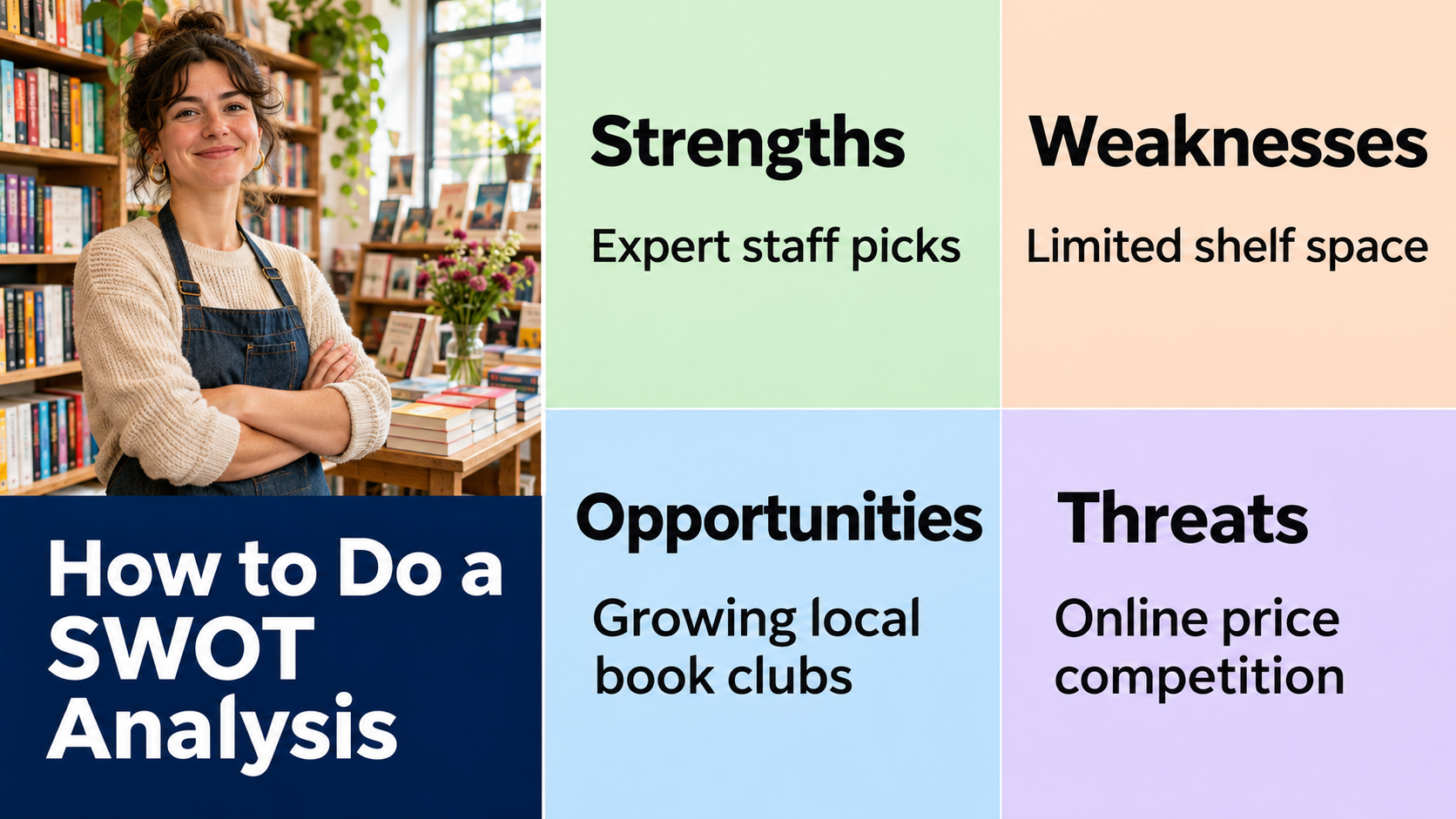
- SWOT: PESTLE findings feed into the opportunities and threats quadrants.
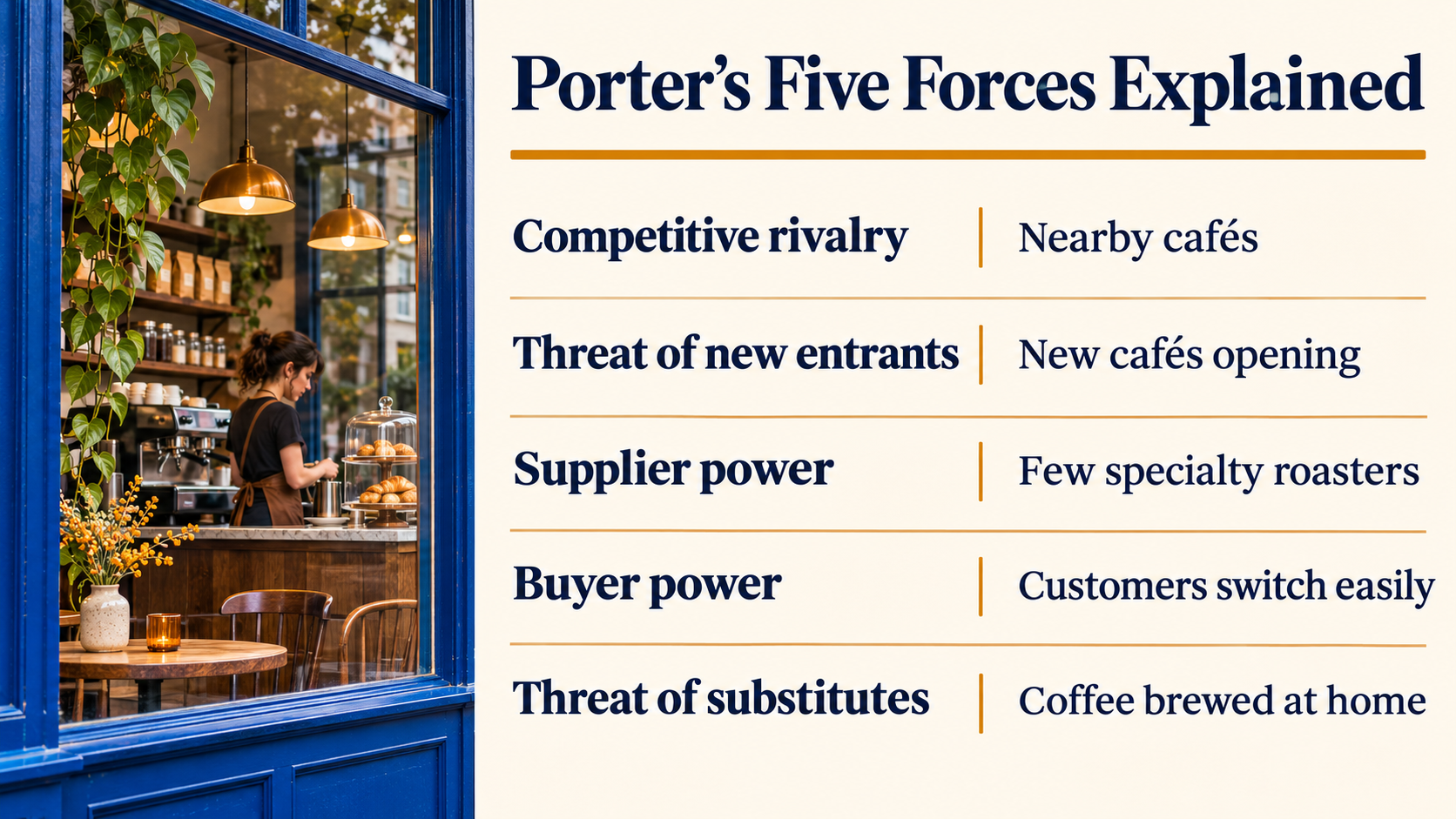
- Porter’s Five Forces: PESTLE examines the broad environment, while Five Forces focuses on industry competition.
- Scenario planning: PESTLE helps identify key uncertainties for building future scenarios.
- Risk registers: important threats can be logged and managed through enterprise risk management.
Variations of the Framework
- PEST: the four-factor version without legal and environmental.
- STEEP: adds environmental to social, technological, economic and political.
- STEEPLE: adds ethical factors.
- PESTLED: adds demographic factors.
The best version is the one that fits your context. A heavily regulated industry may need separate legal and ethical categories, while a small local business might use the simpler PEST.
Practical Tips for a Useful PESTLE
- Focus on factors that genuinely affect your business, not every trend in the world.
- Use evidence and record sources internally so findings can be checked.
- Distinguish short-term noise from long-term trends.
- Involve people from different departments and regions.
- Translate each factor into a clear “so what” for the business.
- Revisit the analysis when major events occur, such as elections or economic shocks.
Limitations and Common Mistakes
- Creating long lists without prioritizing impact.
- Using outdated or unreliable information.
- Confusing internal issues with external factors.
- Treating PESTLE as a one-time exercise.
- Failing to link findings to decisions.
- Assuming all factors are equally important across markets.
- Ignoring interactions between factors, such as technology and regulation.
A Simple PESTLE Example
Consider a fictional company planning to open electric bike rental stations in several mid-sized cities. A PESTLE analysis might highlight:
- Political: local governments offering support for low-emission transport and bike lane investment, but possible changes in council priorities after elections.
- Economic: rising fuel costs encouraging alternatives to cars, but higher interest rates increasing the cost of financing the fleet.
- Social: growing interest in health, fitness and sustainable travel among younger urban residents.
- Technological: better batteries, app-based unlocking and GPS tracking, alongside cybersecurity and data privacy risks.
- Legal: local rules on where bikes can be parked, safety standards, rider age limits and liability for accidents.
- Environmental: emissions targets favoring the service, while extreme heat or storms could reduce usage on some days.
From this analysis, the company might prioritize partnerships with city governments, secure fixed-rate financing, invest in app security, design clear rider safety terms and review liability insurance coverage before launch.
Scoring and Prioritizing Factors
A simple scoring approach helps teams focus. For each factor, rate likelihood from one to five and impact from one to five, then multiply the two to create a priority score. Factors with the highest scores deserve action plans and named owners. Lower-scoring factors can be monitored. Plotting factors on a likelihood and impact grid creates a visual summary that is easy to share with leaders and boards.
Who Uses PESTLE
PESTLE is used well beyond large corporations. Startups use it to test market entry ideas, nonprofits use it to anticipate funding and policy changes, public sector organizations use it for long-term planning, and students use it in case studies. Investors and lenders often expect business plans to show awareness of external risks, and a concise PESTLE summary can demonstrate that awareness.
Turning PESTLE Into Action Plans
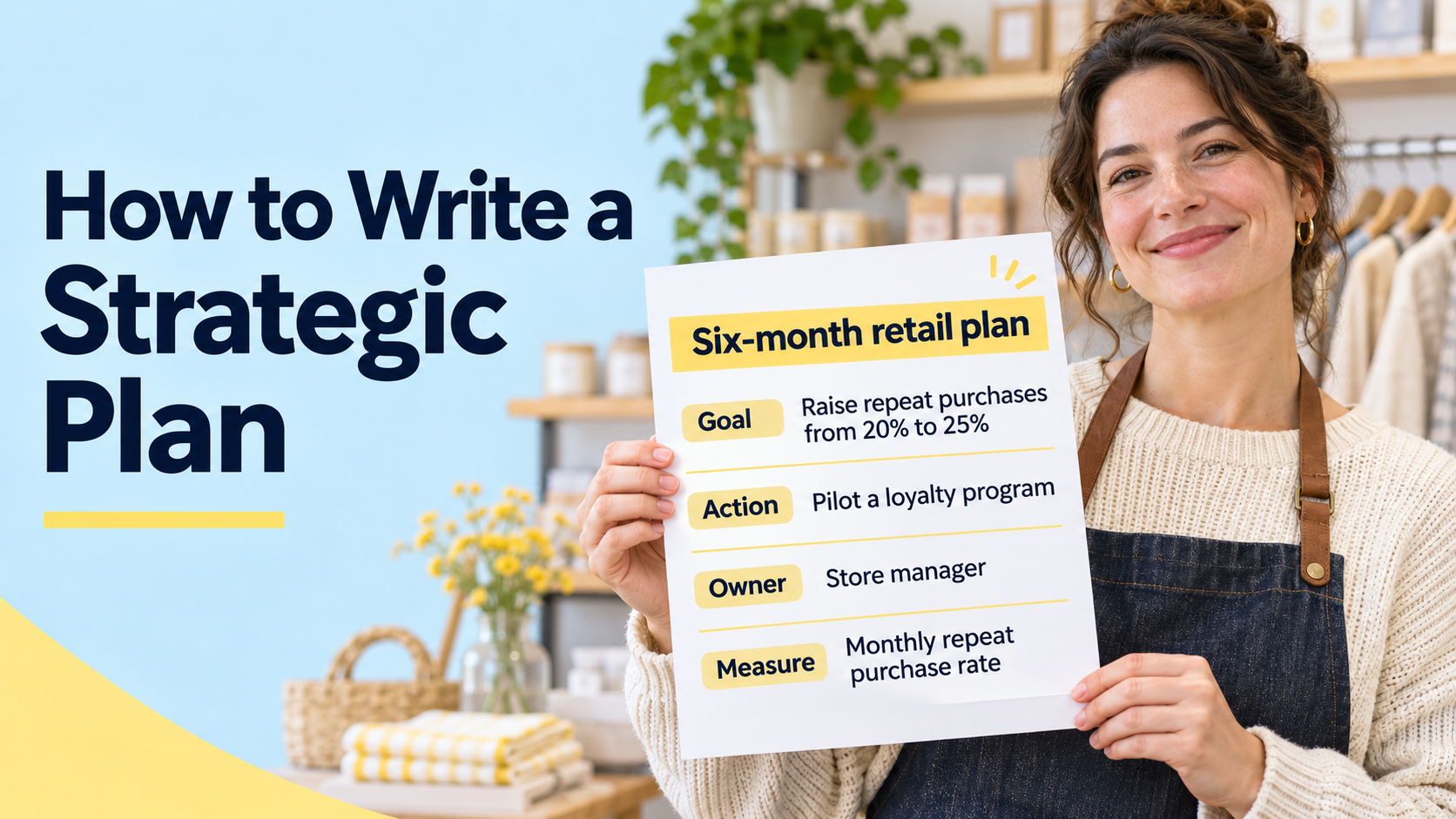
For each high-priority factor, write a short response plan: the factor, why it matters, the expected timing, the owner and the actions to take. Some responses are opportunities to pursue, such as entering a market that new regulations open up. Others are defensive, such as diversifying suppliers to reduce trade risk, hedging currency exposure, building cash reserves before an expected downturn or strengthening compliance processes ahead of new laws. Review these plans alongside the organization’s risk register and budget, so external insights translate into concrete decisions rather than staying in a slide deck.
How Often to Run PESTLE
Many organizations complete a full PESTLE once a year as part of strategic planning, with lighter quarterly reviews of the most important factors. Fast-moving industries, such as technology, energy or financial services, may need more frequent updates. Major events, including elections, sharp interest rate moves, new regulations or supply chain shocks, are good triggers for an immediate review.
Keeping a short log of these reviews also shows boards, lenders and investors that external risks are being watched systematically.
Final Thoughts
PESTLE analysis gives organizations a structured way to scan the political, economic, social, technological, legal and environmental forces that shape their markets. Rooted in environmental scanning work from the 1960s, the framework remains popular because it is simple, flexible and broad. Its real value comes from careful scoping, credible information, prioritizing factors by likelihood and impact and translating findings into clear opportunities, threats and actions. Combined with SWOT, Porter’s Five Forces and scenario planning, PESTLE helps businesses anticipate change rather than react to it. Revisit it regularly, and it becomes an early warning system for strategy. Organizations that build this habit tend to spot shifts earlier than their competitors.
Frequently Asked Questions
1. What does PESTLE stand for?
PESTLE stands for political, economic, social, technological, legal and environmental factors in an organization’s external environment.
2. What is the difference between PEST and PESTLE?
PEST covers four factors: political, economic, social and technological. PESTLE adds legal and environmental factors for a broader view.
3. How is PESTLE used with SWOT?
PESTLE findings often feed into the opportunities and threats sections of a SWOT analysis, providing evidence about the external environment.