SWOT analysis is one of the most widely used tools in business. Startups use it to test ideas, managers use it in planning meetings, consultants use it with clients and students use it in case studies. The tool is simple: list your strengths, weaknesses, opportunities and threats. Yet many SWOT analyses end up as vague lists that never change a single decision. The difference between a useful SWOT and a wasted afternoon lies in how it is done.
This guide explains how to do a SWOT analysis properly. It covers what SWOT is, where it came from, how to prepare, how to fill in each quadrant, practical questions to ask, how to turn findings into strategy using a TOWS matrix, examples, tips for facilitating a SWOT session, limitations and common mistakes.
Table of Contents
What SWOT Analysis Is
SWOT stands for Strengths, Weaknesses, Opportunities and Threats. It is usually presented as a two-by-two grid:
- Strengths: internal attributes that help the organization achieve its goals.
- Weaknesses: internal attributes that hold it back.
- Opportunities: external conditions the organization could use to its advantage.
- Threats: external conditions that could cause problems.
The internal factors, strengths and weaknesses, are things the organization largely controls. The external factors, opportunities and threats, come from the market and wider environment.
SWOT can be applied to a whole company, a business unit, a product, a project, a nonprofit, a department or even an individual’s career.
A Brief History of SWOT
The origins of SWOT are debated. The tool is often associated with corporate planning research at the Stanford Research Institute during the 1960s, with Robert Franklin Stewart and Albert Humphrey frequently named as key figures. Some accounts describe an earlier version called SOFT, standing for satisfactory, opportunity, fault and threat, which later became SWOT. Academic researchers have noted that clear documentary evidence for the exact origin is limited. What is certain is that by the late 1960s and 1970s, management consultants and business schools had adopted the tool widely.
Before You Start: Preparation
A SWOT analysis is only as good as the information and focus behind it. Before filling in the grid:
- Define the objective: is this SWOT for a new market entry, an annual plan, a product launch or a funding decision? A clear objective keeps the analysis focused.
- Set the scope: decide whether you are analyzing the whole business or a specific unit or product.
- Gather data: collect sales figures, customer feedback, competitor information, market research and financial results.
- Choose participants: include people from different functions and levels to avoid a narrow view.
- Agree on a time horizon: opportunities and threats over the next year differ from those over five years.
How to Identify Strengths
Strengths are internal advantages relative to competitors. Helpful questions include:
- What do customers praise us for?
- What do we do better than competitors?
- Which resources are unique or hard to copy, such as patents, data, locations or relationships?
- What skills and experience does our team have?
- Do we have strong cash flow, low costs or financial reserves?
- Is our brand trusted in our market?
Be specific and evidence-based. “Great customer service” is vague. “Customer satisfaction scores above the industry average and repeat purchase rates of a majority of customers” is more useful.
How to Identify Weaknesses
Weaknesses are internal limitations. Honesty matters here, because teams often understate weaknesses. Questions include:
- Where do customers complain?
- Where do competitors outperform us?
- Which skills or resources are we missing?
- Are our costs higher than rivals’?
- Do we depend too heavily on a single customer, supplier or person?
- Are our systems, processes or technology outdated?
Anonymous surveys or input from people outside the leadership team can surface weaknesses that leaders may not see.
How to Identify Opportunities
Opportunities are external trends or conditions the organization could exploit. Questions include:
- Which customer needs are growing or underserved?
- Are new markets, regions or channels opening up?
- Could new technology lower costs or create new products?
- Are competitors exiting or struggling?
- Are regulatory changes creating new demand?
- Could partnerships or acquisitions add capabilities?
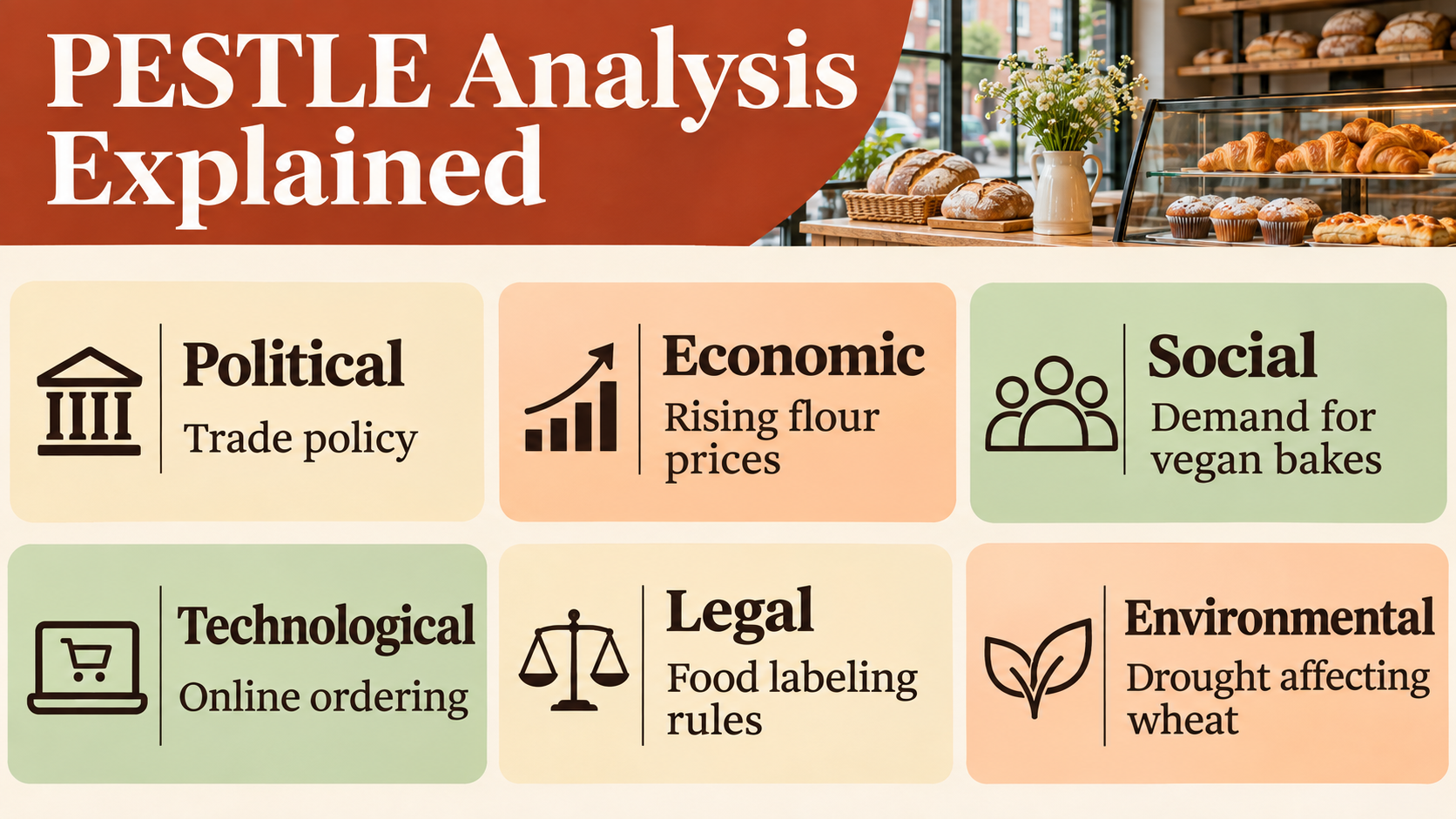
A PESTLE analysis, which scans political, economic, social, technological, legal and environmental factors, is a useful input for identifying opportunities and threats.
How to Identify Threats
Threats are external factors that could harm performance. Questions include:
- Are new competitors entering the market?
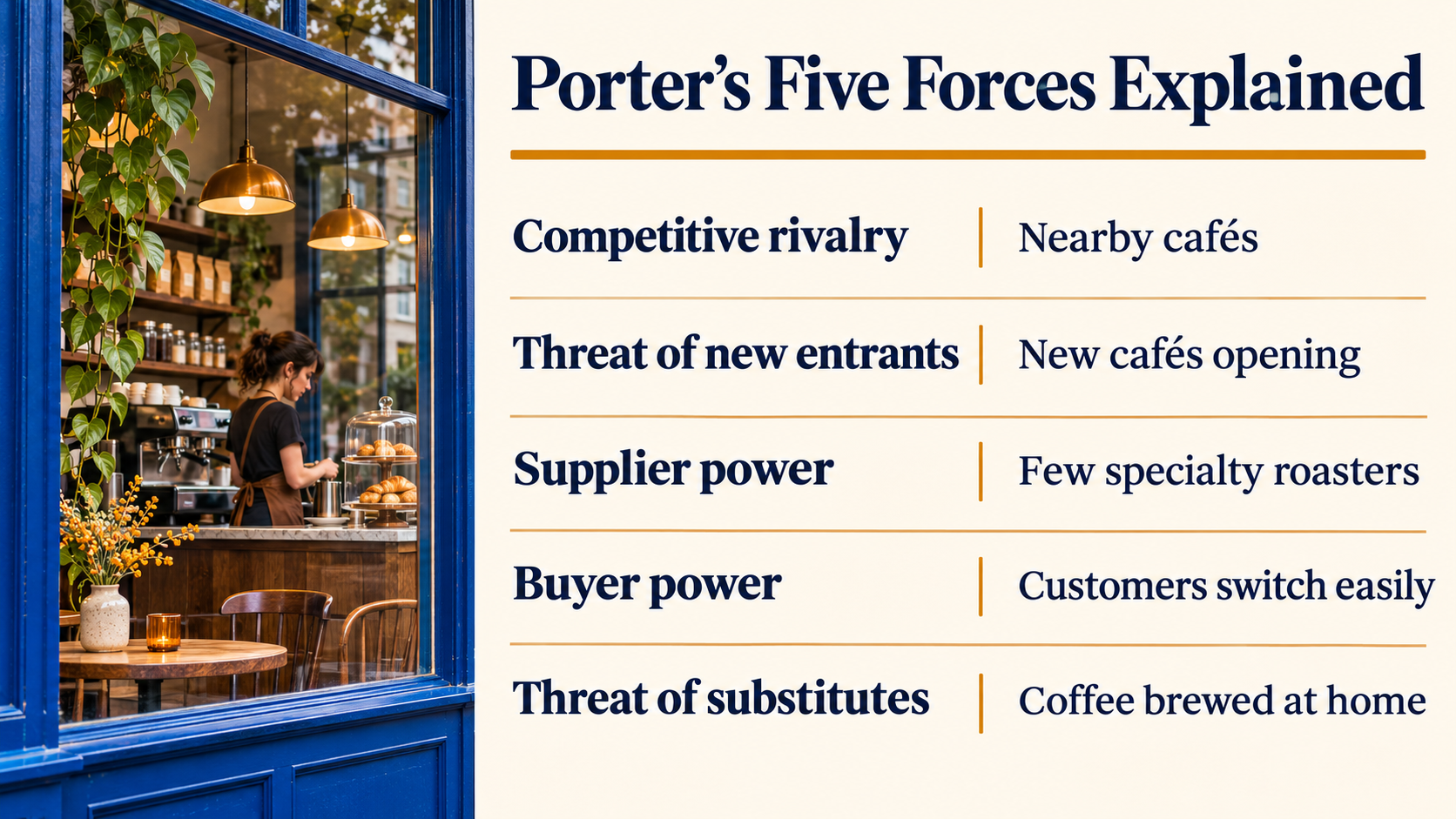
- Are substitutes becoming more attractive?
- Are customer preferences shifting away from our offerings?
- Are costs for materials, labor, energy or borrowing rising?
- Could new regulations increase compliance costs?
- Are cybersecurity, supply chain or natural disaster risks growing?
Some threats can be reduced with risk management, such as diversifying suppliers, strengthening cybersecurity or reviewing business insurance coverage for property, liability, cyber incidents and business interruption.
SWOT at a Glance
| Quadrant | Internal or External | Helpful or Harmful | Example Questions |
|---|---|---|---|
| Strengths | Internal | Helpful | What do we do better than anyone else? |
| Weaknesses | Internal | Harmful | Where do we lose deals or disappoint customers? |
| Opportunities | External | Helpful | Which trends could we use to grow? |
| Threats | External | Harmful | What changes could hurt our results? |
Turning SWOT Into Strategy With the TOWS Matrix
A list of factors is not a strategy. The TOWS matrix helps convert SWOT findings into strategic options by combining quadrants:
- Strengths and Opportunities (SO strategies): use strengths to capture opportunities. Example: a company with strong online sales capabilities expands into a growing international market.
- Weaknesses and Opportunities (WO strategies): improve weaknesses to take advantage of opportunities. Example: invest in training to enter a new service line.
- Strengths and Threats (ST strategies): use strengths to reduce threats. Example: use a loyal customer base to defend against a new low-cost competitor.
- Weaknesses and Threats (WT strategies): minimize weaknesses and avoid threats. Example: exit an unprofitable product line facing new regulations.
After listing options, prioritize them based on impact, feasibility, cost and alignment with long-term goals.
A Simple Example
Consider a small independent bakery in a growing suburb:
- Strengths: high-quality artisan bread, loyal local customers, skilled head baker.
- Weaknesses: limited seating, no online ordering, dependence on one baker.
- Opportunities: rising demand for local and specialty foods, nearby office development, growth in delivery apps.
- Threats: a national chain opening nearby, rising flour and energy costs, labor shortages.
Possible strategies might include launching online preorders and corporate catering for the new offices (SO), training a second baker to reduce key person risk (WO), emphasizing local craftsmanship in marketing to stand apart from the chain (ST) and reviewing pricing and energy efficiency to protect margins (WT).
How to Run a SWOT Session
- Share background data before the session so participants come prepared.
- Start with individual brainstorming to avoid groupthink, then combine ideas.
- Use sticky notes or a digital whiteboard to collect ideas in each quadrant.
- Cluster similar ideas and remove duplicates.
- Ask for evidence behind each point.
- Prioritize the most important factors using voting or scoring.
- Move to the TOWS step before ending the session.
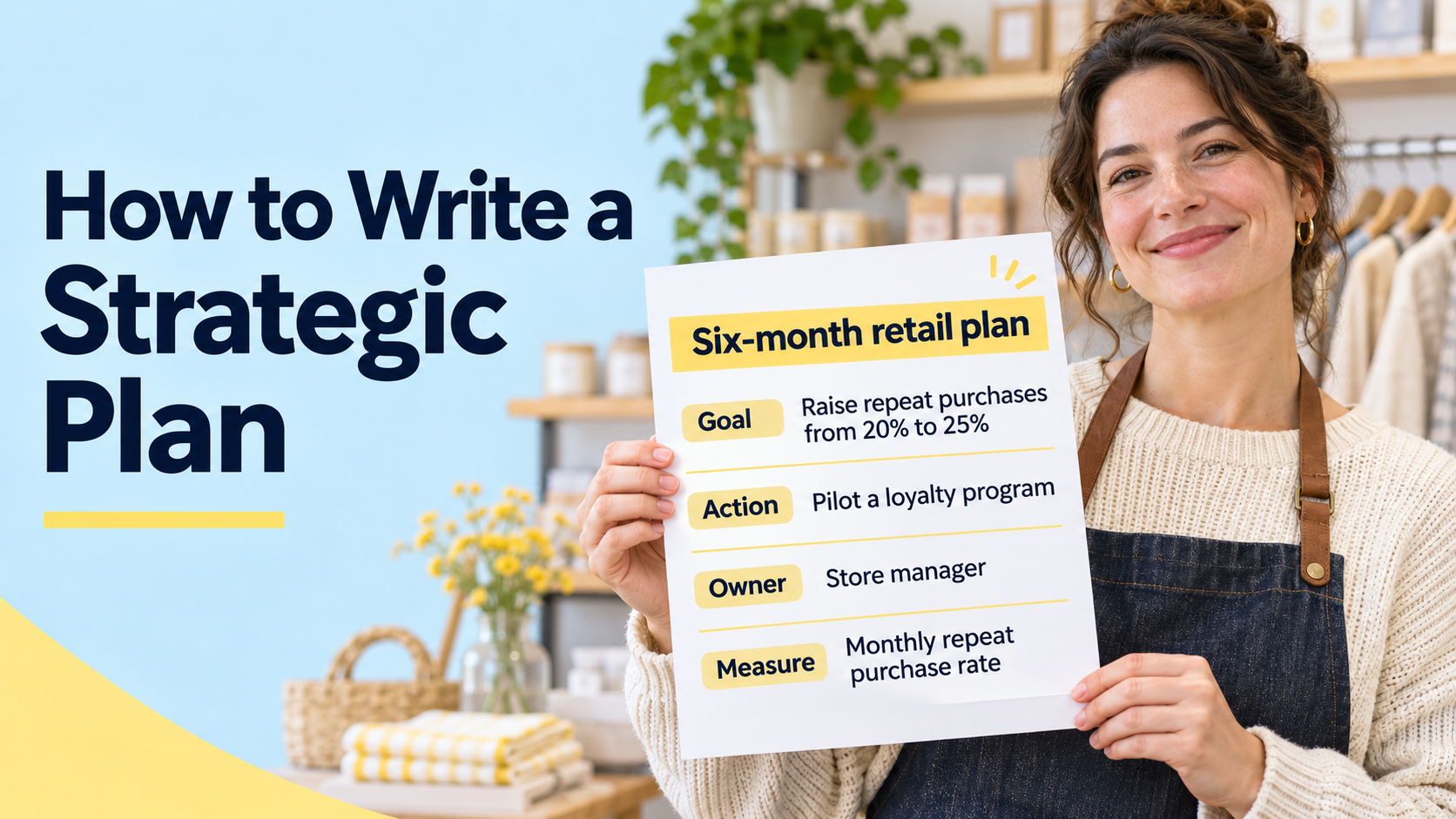
- Assign owners and next steps for the chosen strategies.
Limitations of SWOT
SWOT is popular because it is simple, but simplicity has costs:
- It can produce long, unprioritized lists.
- Factors can be subjective and based on opinion rather than evidence.
- The same factor can appear as both a strength and a weakness depending on perspective.
- It offers a snapshot at one point in time rather than ongoing insight.
- It does not automatically generate strategies.
Many organizations combine SWOT with tools such as PESTLE, Porter’s Five Forces, competitor analysis and customer research to get a fuller picture.
Practical Tips for a Better SWOT
- Keep each quadrant to the top five to seven items after prioritizing.
- Compare against competitors, not just your own past performance.
- Use data wherever possible.
- Separate internal and external factors carefully.
- Include customer and frontline perspectives.
- Revisit the SWOT regularly, especially after major changes.
- Document decisions and actions that result from the analysis.
Common SWOT Mistakes
- Listing opportunities that are really internal plans, such as “launch a new website.” The opportunity is the external trend, such as growing online demand.
- Confusing strengths with goals, such as “become market leader.”
- Being too vague, such as “good team” or “competition.”
- Ignoring uncomfortable weaknesses.
- Stopping after the grid without developing strategies.
- Doing SWOT once and never updating it.
- Letting the most senior person dominate the discussion.
Personal SWOT for Careers
SWOT also works for individuals planning a career move. Strengths might include specific skills or certifications, weaknesses might be gaps in experience, opportunities could be growing demand in a field, and threats might include automation or competition from other candidates. A personal SWOT can guide decisions about training, job applications and salary negotiations.
SWOT for Different Purposes
The focus of a SWOT changes with its purpose. For a product launch, concentrate on customer needs, competing products and launch risks. For market entry, emphasize local competitors, regulations and partner options. For a funding application, lenders and investors want to see that you understand risks and how you will manage them. For a nonprofit, opportunities might include new grant programs, while threats could include donor fatigue or policy changes. Tailoring the SWOT to its purpose keeps the analysis relevant and actionable.
Presenting SWOT Results
Present the final SWOT as a clean grid with prioritized points, followed by the chosen strategies from the TOWS step. Keep supporting evidence in an appendix.
Questions to Check Your Finished SWOT
- Is every point supported by evidence or at least specific examples?
- Are internal and external factors in the right quadrants?
- Have we compared ourselves with competitors rather than only our past?
- Have we prioritized the most important points?
- Do we have at least one clear strategy linked to the top items in each quadrant?
If the answer to any question is no, revisit the analysis before using it for decisions.
A short peer review by someone outside the team can also catch blind spots before the SWOT is presented to leaders.
Final Thoughts
A SWOT analysis is a simple but powerful way to understand an organization’s position by examining internal strengths and weaknesses alongside external opportunities and threats. Its value depends on preparation, honesty, evidence and, most importantly, what happens next. Define a clear objective, gather data, involve diverse perspectives and prioritize the most important factors. Then use the TOWS matrix to turn findings into concrete strategic options with owners and timelines. Combined with tools like PESTLE and competitor analysis and reviewed regularly, SWOT becomes far more than a planning ritual. It becomes a practical guide for better decisions. Treat it as a living tool that improves every planning cycle.
Frequently Asked Questions
1. What are the four parts of a SWOT analysis?
The four parts are strengths and weaknesses, which are internal, and opportunities and threats, which are external to the organization.
2. What is the TOWS matrix?
The TOWS matrix combines SWOT quadrants to generate strategies, such as using strengths to capture opportunities or reducing weaknesses to avoid threats.
3. How often should a SWOT analysis be updated?
Many organizations update SWOT annually as part of planning and revisit it when major changes occur in markets, technology, competition or internal operations.