Winning a new customer takes effort: advertising, sales calls, discounts and time. Losing that customer a few months later wastes all of it. Customer retention, the ability to keep customers coming back, is one of the most powerful drivers of profitable growth. Loyal customers tend to buy more over time, cost less to serve, recommend the business to others and are often less sensitive to price. Yet many businesses spend far more energy chasing new customers than caring for the ones they already have.
This guide explains customer retention strategies in practical terms. It covers why retention matters, how to measure it, understanding why customers leave, onboarding, customer experience, service, communication, loyalty programs, personalization, subscriptions, feedback, community building, handling complaints, win-back campaigns, retention in B2B markets, retention for small businesses, technology tools and common mistakes.
Table of Contents
Why Customer Retention Matters
- Lower costs: acquiring new customers is widely considered more expensive than keeping existing ones.
- Higher lifetime value: loyal customers often buy more frequently and spend more over time.
- Word of mouth: satisfied customers refer friends and colleagues.
- Predictable revenue: repeat customers make forecasting and planning easier.
- Valuable feedback: long-term customers help improve products and services.
- Competitive protection: loyal customers are less likely to switch to rivals.
Research frequently referenced in business literature suggests that even small improvements in retention can produce outsized gains in profit, because loyal customers generate more revenue and cost less to serve over time.
How to Measure Customer Retention
| Metric | What It Measures | Simple Calculation |
|---|---|---|
| Customer retention rate | Share of customers kept over a period | (Customers at end minus new customers) divided by customers at start |
| Churn rate | Share of customers lost | Customers lost divided by customers at start |
| Repeat purchase rate | Share of customers who buy more than once | Repeat customers divided by total customers |
| Customer lifetime value | Expected value of a customer relationship | Average purchase value times frequency times relationship length, adjusted for margin |
| Net promoter score | Likelihood of recommending | Percentage of promoters minus percentage of detractors |
| Revenue retention | Revenue kept from existing customers | Revenue from existing customers now divided by revenue from them earlier |
Track these metrics over time and by segment, such as product line, region or acquisition channel, to see where retention is strong or weak.
Understanding Why Customers Leave
Before fixing retention, understand churn. Common reasons include:
- Poor product quality or performance.
- Bad customer service experiences.
- Feeling ignored or undervalued.
- Better offers from competitors.
- Price increases without clear added value.
- Complicated processes, such as difficult ordering or billing.
- Changing needs that the business no longer meets.
- Not seeing results from the product or service.
Ask departing customers why they left through short exit surveys or calls. Analyze patterns in complaints, support tickets and usage data.
Strategy 1: Make Onboarding Excellent
The first experiences shape long-term loyalty. Strong onboarding helps customers get value quickly:
- Send a warm welcome message explaining what to expect.
- Provide simple guides, videos or tutorials.
- Offer setup help or a kickoff call for complex products.
- Check in after the first purchase or first weeks of use.
- Highlight quick wins that show the product’s value.
Strategy 2: Deliver a Consistent Customer Experience
- Map the customer journey from discovery to after-sales support.
- Remove friction, such as long wait times, confusing websites or complicated returns.
- Keep promises on delivery times, quality and pricing.
- Ensure staff across channels give consistent information.
- Make it easy to contact the business through preferred channels.
Strategy 3: Provide Outstanding Customer Service
Service often determines whether customers stay. Good practices include:
- Responding quickly and courteously.
- Empowering staff to solve problems without excessive escalation.
- Following up to confirm issues are resolved.
- Training staff in empathy and communication.
- Tracking service metrics, such as response time and resolution rate.
Strategy 4: Communicate Regularly and Meaningfully
- Send useful content, such as tips, guides and product updates.
- Share relevant offers based on customer interests.
- Remind customers about renewals, maintenance or reorders.
- Celebrate milestones, such as anniversaries.
- Avoid overwhelming customers with too many messages.
Strategy 5: Create a Loyalty Program
Loyalty programs reward repeat behavior. Common types include:
- Points programs: customers earn points to redeem for rewards.
- Tiered programs: higher spending unlocks better benefits.
- Paid memberships: customers pay a fee for ongoing perks, such as free shipping.
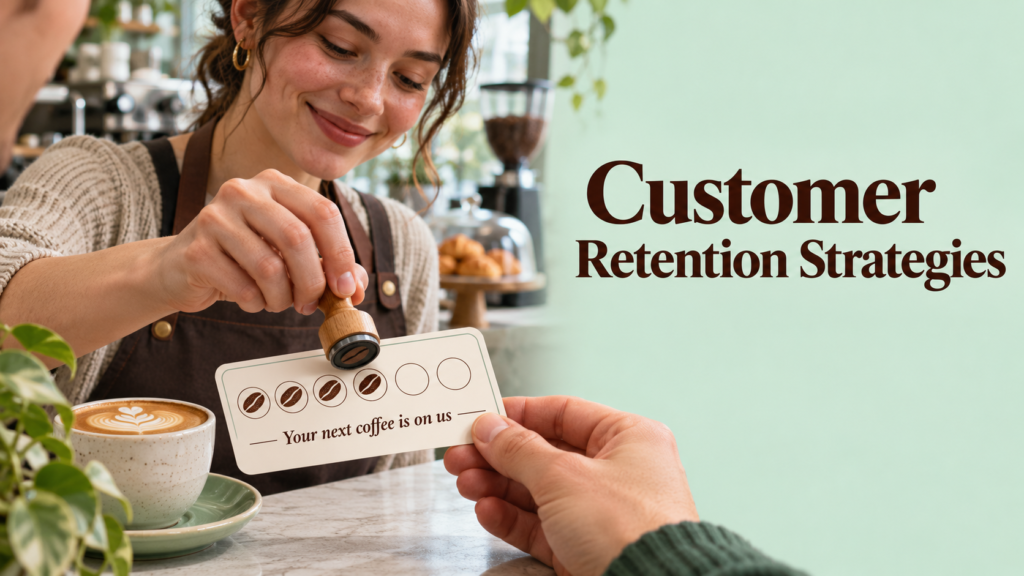
- Punch cards: simple programs for local businesses, such as a free coffee after ten purchases.
- Referral rewards: incentives for recommending new customers.
Keep programs simple, make rewards achievable and track whether the program actually increases retention and profit.
Strategy 6: Personalize the Experience
Customers appreciate being recognized. Use customer data, with consent and in compliance with privacy laws, to personalize recommendations, offers and communications. Even simple touches, such as using names, remembering preferences and acknowledging past purchases, build connection.
Strategy 7: Offer Subscriptions and Service Plans
Subscriptions, memberships and service contracts create ongoing relationships. Examples include monthly product deliveries, maintenance plans, software subscriptions and extended warranties. Focus on delivering continuous value and make cancellation policies clear and fair, as many jurisdictions regulate automatic renewals.
Strategy 8: Ask for Feedback and Act on It
- Use surveys after purchases or service interactions.
- Measure satisfaction and net promoter scores regularly.
- Invite customers to advisory groups or beta programs.
- Monitor online reviews and respond professionally.
- Tell customers what changes you made based on their feedback.
Strategy 9: Build Community
Communities create emotional connections. Ideas include online forums, user groups, events, workshops and social media groups. Communities let customers learn from each other, increasing product value and loyalty.
Strategy 10: Handle Complaints Well
A well-handled complaint can strengthen loyalty. Steps include listening carefully, apologizing sincerely, fixing the problem quickly, offering fair compensation where appropriate and following up. Track complaints to fix root causes.
Strategy 11: Win Back Lost Customers
- Identify customers who have not purchased recently.
- Send personalized messages asking for feedback.
- Offer incentives to return, such as discounts or upgrades.
- Highlight improvements made since they left.
- Make returning easy.
Retention in B2B Markets
Business customers often have long contracts and multiple decision-makers. Retention strategies include assigning account managers, conducting quarterly business reviews, demonstrating return on investment, offering training and building relationships with several contacts in the customer organization. Monitor usage and satisfaction to spot risks before renewal dates.
Retention for Small Businesses
- Learn regular customers’ names and preferences.
- Use simple loyalty cards or digital punch cards.
- Send thank-you notes or messages.
- Follow up after purchases.
- Offer exclusive previews or events for loyal customers.
- Ask for reviews and referrals.
Small businesses often have an advantage in personal relationships that larger competitors struggle to match.
Technology Tools for Retention
- Customer relationship management systems to track interactions.
- Email marketing platforms for personalized communication.
- Loyalty program software.
- Customer feedback and survey tools.
- Help desk software for service tracking.
- Analytics tools to predict churn.
Choose tools that fit your size and budget, and make sure customer data is protected with strong security practices.
Practical Tips
- Set a retention target and review it monthly.
- Focus first on your most valuable customer segments.
- Train every employee on the importance of retention.
- Make it easy to buy again.
- Reward loyalty, not just new sign-ups.
- Fix recurring problems quickly.
Common Mistakes
- Focusing only on acquisition.
- Offering better deals to new customers than loyal ones.
- Ignoring early warning signs of churn.
- Making cancellation or returns unnecessarily difficult.
- Over-communicating with irrelevant messages.
- Collecting feedback without acting on it.
- Running loyalty programs that cost more than they return.
Using Data to Predict Churn
Many businesses can spot customers at risk of leaving before they actually go. Warning signs include falling purchase frequency, declining product usage, more support tickets, negative survey responses, late payments and failure to renew on time. Simple rules, such as flagging customers who have not purchased in a set number of days, can trigger outreach. Larger businesses may use analytics models that score churn risk based on many factors. When a customer is flagged, a personal check-in, helpful content or a tailored offer can often prevent the loss.
Training Employees for Retention
Every employee who interacts with customers influences retention. Training should cover the business’s service standards, how to handle complaints, how to recognize unhappy customers and how to escalate issues. Empowering frontline staff with clear guidelines for resolving problems, such as offering refunds or replacements within set limits, reduces delays and frustration. Recognizing employees who receive positive customer feedback reinforces the importance of retention throughout the organization.
Retention Across Industries
- Retail: loyalty points, personalized offers and easy returns.
- Restaurants: regular-customer recognition, birthday rewards and consistent quality.
- Software: onboarding, in-app guidance and proactive customer success.
- Financial services and insurance: annual reviews, bundled discounts and responsive claims or account support.
- Health and fitness: progress tracking, community classes and flexible memberships.
- Professional services: regular check-ins, clear reporting and long-term planning with clients.
Retention and Pricing
Price increases are a common churn trigger. Communicate increases early, explain the reasons and highlight added value. Consider grandfathering loyal customers for a period or offering annual plans at a discount to lock in commitment.
Building a Retention Plan
Bring these strategies together in a short plan. Start with current retention and churn figures, identify the top three reasons customers leave, choose two or three strategies that address those reasons, assign owners, set targets and review results monthly. Focus first on the most valuable customer segments, then expand. A clear plan turns good intentions into measurable improvement.
Questions to Guide Your Retention Efforts
- Which customers are most valuable to keep, and are we treating them that way?
- At what point in the journey do most customers leave?
- What do our most loyal customers say they value most?
- How quickly do we respond when a customer complains?
Final Thoughts
Customer retention is one of the most reliable paths to profitable, sustainable growth. Loyal customers spend more over time, cost less to serve, provide valuable feedback and bring in new customers through referrals. Strong retention starts with understanding why customers leave and measuring retention, churn and lifetime value. Practical strategies include excellent onboarding, consistent experiences, outstanding service, meaningful communication, loyalty programs, personalization, subscriptions, feedback, community and effective complaint handling, plus win-back efforts for lost customers. Whether you run a small local shop or a large B2B company, investing in the customers you already have is one of the smartest decisions you can make.
Frequently Asked Questions
1. What is a good customer retention rate?
It varies widely by industry and business model. Subscription and B2B businesses often aim for high retention, while retail may see lower rates. Compare against your own history and industry benchmarks.
2. What is the difference between retention and loyalty?
Retention measures whether customers keep buying, while loyalty reflects their emotional commitment and willingness to recommend. Loyal customers are usually retained, but retained customers are not always loyal.
3. How can small businesses improve retention?
Small businesses can build personal relationships, use simple loyalty programs, follow up after purchases, ask for feedback and make buying again easy.